

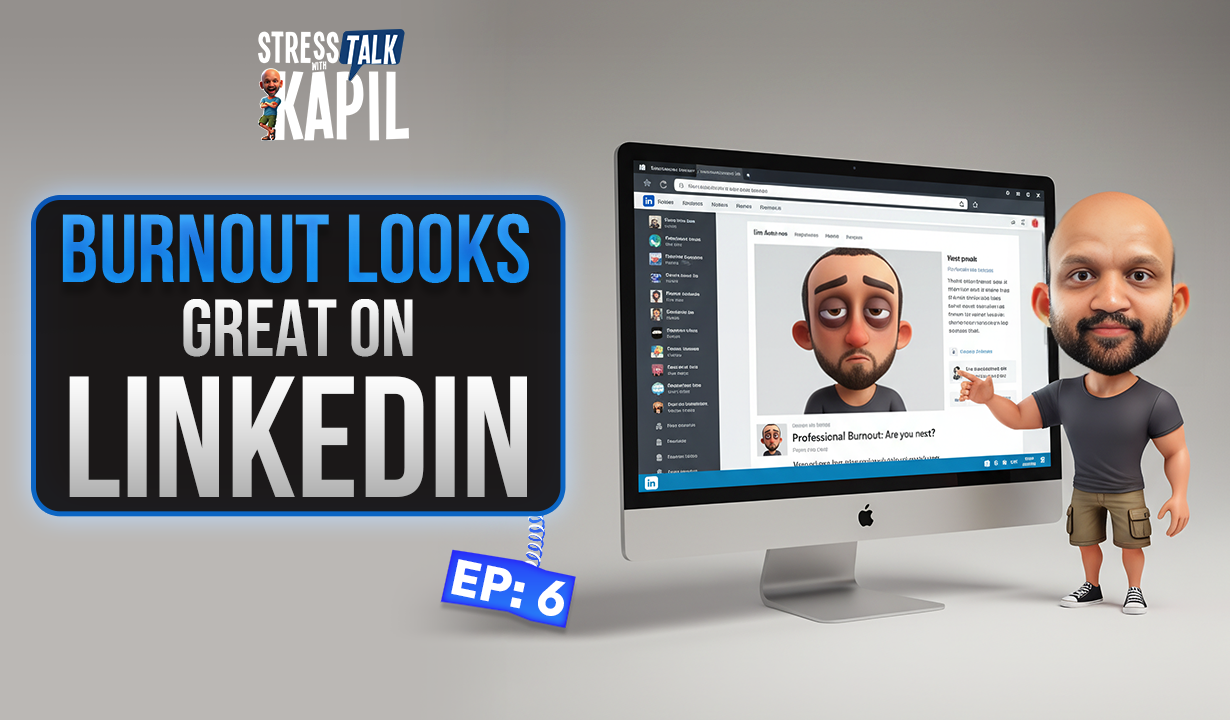
Burnout Has a PR Team Called Productivity

What does it really mean when we call someone “productive”?
Productivity today often means endurance, not effectiveness.
In many conversations around burnout at work, productivity is measured by how long someone stays active, not how well their mind is functioning.
It measures how long someone stays active, not how well their mind is functioning.
In many workplaces, productivity has quietly shifted from output quality to visible exhaustion—late nights, packed calendars, and constant availability. What looks like dedication is often a nervous system running on chronic work stress.
This is how workplace burnout becomes normalized. You can explore how stress impacts retention and performance further in the article on stress management for employee retention, which dives into why unmanaged stress drives top talent out of organizations.
Is burnout the same as laziness or lack of motivation?
No. Burnout is not laziness. It is energy depletion.
Employee burnout happens when mental, emotional, and physical energy is continuously withdrawn without recovery. People don’t stop caring because they’re lazy—they stop caring because their system is overloaded by sustained work stress.
Burned-out individuals often:
- Still show up
- Still meet deadlines
- Still look “functional”
But internally, they are operating in survival mode—experiencing emotional exhaustion, mental fatigue, and early signs of job burnout.
Why do busy schedules feel productive even when they’re not?
Because busyness is visible and measurable.
Meetings on a calendar. Emails sent at midnight. Tasks checked off. These are easy to see and reward. But clarity, creativity, and cognitive capacity—key drivers of workplace productivity—are invisible and therefore ignored.
Many people mistake motion for progress.
A full calendar often signals:
- Constant context switching
- Reduced deep thinking
- Autopilot decision-making
Not meaningful work.
This is where burnout at work hides behind the illusion of productivity. The problem of silent stress undermining measurable outcomes is echoed in the piece You’re Tracking Every Metric Except the One That’s Killing Your Company: Stress, which argues that stress quietly erodes performance when leaders ignore it.
Does stress improve productivity?
Only briefly—and then it sharply reduces it.
Short-term stress can increase alertness. But prolonged stress does the opposite:
- Decision-making quality drops
- Creativity narrows
- Errors increase
- Emotional regulation weakens
People may still “perform,” but the work becomes mechanical, conservative, and risk-averse. The long-term impact of burnout on productivity is quiet but severe.
This is why burned-out teams stop innovating.
Why don’t burned-out people innovate or think creatively?
Because burnout puts the brain into threat mode.
When energy is low, the nervous system prioritizes safety over exploration. People conserve instead of create. They avoid risk, stick to familiar patterns, and focus on getting through the day—classic burnout syndrome behavior.
This isn’t a mindset problem.
It’s a biological response to chronic stress at work.
How do organizations confuse being busy with being effective?
By measuring hours instead of capacity.
A person working 12 hours may not be productive—they may be compensating with adrenaline and fear. Fear of falling behind. Fear of appearing replaceable. Fear of slowing down.
Real effectiveness depends on:
- Mental clarity
- Emotional stability
- Physical energy
- Psychological safety at work
None of these show up on timesheets, yet all determine employee wellbeing and sustainable performance.
What is the real cost of glorifying exhaustion?
When exhaustion is rewarded:
- Rest feels unsafe
- Boundaries disappear
- High performers quietly disengage
- Teams become brittle and reactive
Organizational burnout doesn’t explode.
It erodes.
First curiosity disappears.
Then initiative.
Then care.
By the time performance drops, the damage from professional burnout is already done.
What should productivity actually mean?
Productivity should mean usable human capacity, not time spent.
True productivity is the ability to:
- Think clearly
- Solve problems
- Make good decisions
- Sustain performance over time
It is not last-minute panic masked as commitment.
It is the opposite of burnout culture.
How should leaders rethink productivity?
Leaders need to shift from asking:
“How much are people doing?”
to:
“How much capacity do they actually have?”
Because:
- Burned-out people don’t innovate
- Exhausted teams don’t scale
- Fear-driven cultures don’t sustain
Performance without recovery is not growth.
It’s slow collapse—and one of the leading causes of burnout at work.
FAQs: Burnout at Work
1. What are the common signs of burnout at work?
Common signs include emotional exhaustion, mental fatigue, reduced motivation, irritability, and declining creativity—often while the person still appears productive.
2. How does burnout at work affect productivity?
Burnout reduces decision-making quality, creativity, and focus. While output may continue short term, long-term workplace productivity declines significantly.
3. What causes burnout at work?
High workload, long working hours, chronic work stress, lack of work-life balance, poor psychological safety, and toxic work culture are major causes.
4. Is burnout at work the same as stress?
No. Stress can be temporary, while burnout is the result of prolonged, unmanaged stress leading to emotional and physical depletion.
5. How can organizations prevent burnout at work?
By prioritizing employee wellbeing, measuring capacity instead of hours, promoting recovery, and building psychologically safe environments.
Final Thought
If exhaustion is the trophy, your team isn’t winning. They’re breaking.
And no organization builds long-term success by breaking the very people it depends on—especially in a world where workplace mental health directly shapes outcomes.

THEY COULDN’T SECURE THE EXAM. SO THEY BANNED THE MESSENGER.