Operation Epic Fury – Why the Latest US Attack on Iran Upset the World

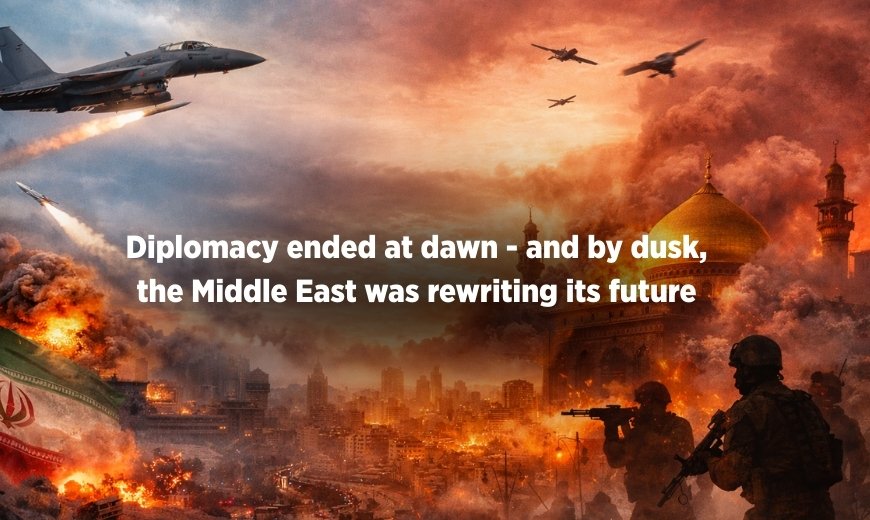
This isn’t another routine Middle East skirmish. On 28 February 2026, the United States and Israel launched large-scale coordinated strikes deep into Iran – an operation Washington called Epic Fury – aimed at dismantling Iran’s missile infrastructure, naval forces, and leadership hubs after negotiations collapsed.
What unfolded has now escalated into what many analysts are calling the US Iran war 2026, a confrontation that is reshaping the balance of power in the region.
Trump described the assault as a “massive and ongoing operation” meant to render Iran unable to threaten the region or rebuild its Iran nuclear program and ballistic missile capabilities — weapons that, if unchecked, could destabilize the Gulf and beyond.
This was not a marginal bomb run. It was the most significant US military engagement in Iran since the strikes on nuclear sites in 2025 — sites Trump previously claimed were “obliterated.”
What unfolded in the hours afterwards was shockingly broad: Tehran launched Iran missile retaliation strikes and drones not just at Israel but against US military installations and assets across the Gulf, including in Bahrain, Kuwait, Qatar, the UAE and Jordan — sparking explosions that forced airspace closures from eight states. Oman, remarkably, was spared in the initial barrage.
The Fallout: A Region on Fire
Before this crisis erupted, Oman had played a quiet but crucial diplomatic role. Mediators from Muscat reported that near-deal negotiations with Tehran on nuclear constraints were within reach just days before the war broke out — only for the military operation to torpedo those efforts.
This breach of diplomatic momentum isn’t a footnote — it’s proof that war now sabotages diplomacy rather than coexists with it.
The collapse of talks has turned what was a tense standoff into a full-fledged US Iran conflict, widening the arc of instability across the Gulf.
Iran’s Strategic Response
Iran’s retaliation wasn’t symbolic. By targeting multiple US bases and allied airspaces, Tehran signaled it could turn this conflict into a regional confrontation, not a contained strike.
Missiles over Bahrain’s US Fifth Fleet base and intercepted ordnance over the UAE underline a sobering point: Iran’s conventional arsenal still packs punch.
This was not just missile counter-fire. It was a message — every US and Israeli asset in the region is now fair game unless Washington recalibrates its posture.
The scope of the response marks a dangerous phase of Middle East war escalation, where deterrence risks morphing into sustained regional warfare – part of a wider pattern of Middle East war escalation that has already reshaped regional stability in recent years.
Saudi Arabia, GCC States, and the Unity of Fear
The Gulf Cooperation Council now sits at a finer edge than ever. Saudi Arabia officially condemned Iran’s attack as a “blatant violation of sovereignty” against the UAE, Bahrain, Qatar, Kuwait and Jordan, calling on the international community to respond decisively.
These are countries hosting US troops, energy infrastructure and strategic assets — not passive observers.
This condemnation reflects not just political posturing but palpable insecurity: these states realize they lie on the fault line between a nuclear-obsessed Tehran and a militarized Washington.
With missiles crossing airspace and military bases under threat, concerns over oil prices Middle East have surged, as energy markets brace for supply disruptions across critical trade routes.
The Modi–Israel Trip and Global Context
This crisis erupted just days after Indian Prime Minister Narendra Modi’s state visit to Israel, a trip centered on expanding strategic ties and defense cooperation.
While Modi’s engagements weren’t about Iran directly, the timing highlights a harsh reality of current geopolitics: Asia’s strategic partnerships are converging right where great-power conflict is escalating.
India is stitching a network of diplomatic and defense relationships amid a geopolitical architecture that now includes a militarized Middle East and shifting power balances driven partly by America’s declining global influence
The visit becomes more than optics. It becomes strategic context within the unfolding US Iran war 2026.
Why This Makes Everything More Insecure
This conflict didn’t stay within Iranian borders:
- Airspaces were shut across eight Middle Eastern countries.
• Regional states with US bases saw missiles and blasts.
• Diplomatic channels — especially Oman’s mediation — collapsed.
• Energy security and trade routes loom at risk in an already fragile market.
War doesn’t dissolve the causes of conflict. It only amplifies them.
What began as a targeted strike has evolved into a widening US Iran conflict, with the potential to reshape regional deterrence, energy security, and the future of the Iran nuclear program.
Public Statements You Should Know
🇺🇸 Trump (US):
• Declared major combat operations “massive and ongoing.”
• Vowed to destroy Iran’s missiles and navy.
• Admitted US casualties are possible.
🇮🇷 Tehran:
• Responded with missile strikes on US and Israeli targets.
• Called all US assets legitimate targets.
🇴🇲 Oman:
• Reportedly brokered near-deal before war.
• Expressed frustration after strikes undermined diplomacy.
🇶🇦 Qatar:
• Intercepted missiles, maintained vigilance.
🇸🇦 Saudi Arabia:
• Condemned Iranian attacks as sovereignty violations.
FAQs – US Iran War 2026
1️⃣ What triggered the US Iran war 2026?
The US Iran war 2026 was triggered by large-scale coordinated strikes by the United States and Israel targeting Iran’s missile infrastructure, naval assets, and leadership hubs after nuclear negotiations collapsed. The operation aimed to weaken Iran’s military capabilities and limit the expansion of its Iran nuclear program, but it quickly escalated into a broader regional confrontation.
2️⃣ How did Iran respond to the US strikes?
Iran launched widespread missile and drone attacks targeting US military bases and allied assets across the Gulf region. This Iran missile retaliation expanded the conflict beyond Israeli territory and signaled Tehran’s willingness to escalate the US Iran conflict into a wider Middle East war escalation.
3️⃣ Could the US Iran conflict spread across the Middle East?
Yes. The scope of airspace closures, missile interceptions, and threats to US bases indicates that the US Iran conflict has the potential to regionalize rapidly. Gulf states hosting US forces face heightened security risks, raising concerns of prolonged Middle East war escalation.
4️⃣ What impact could the US Iran war 2026 have on oil prices in the Middle East?
Any sustained military confrontation in the Gulf threatens key shipping lanes and energy infrastructure. As a result, oil prices Middle East markets react quickly to signs of escalation, especially if routes like the Strait of Hormuz face disruption. Energy volatility is one of the most immediate global consequences of this conflict.
5️⃣ How does the Iran nuclear program factor into the conflict?
A central objective of the strikes was to limit Iran’s ability to rebuild or expand its Iran nuclear program. Diplomatic efforts reportedly nearing agreement collapsed after the attacks, raising concerns that military escalation may complicate future nuclear negotiations rather than resolve them.