War Isn’t New. It Just Lost Its Shy Mode

If you thought 7 October 2023 was the “start” of regional crisis, you were looking at a bruise. What broke last weekend looks like a fracture with fireworks, and not because diplomacy failed — but because someone decided diplomacy was too soft to make headlines anymore.
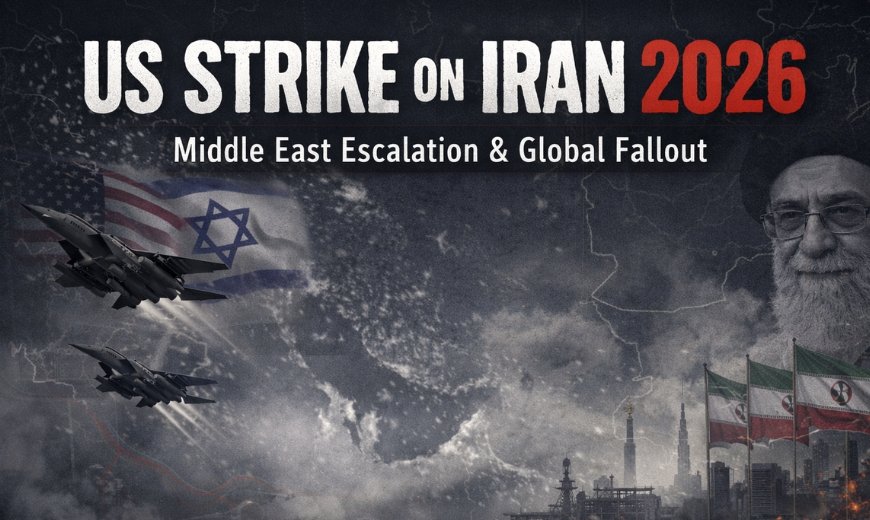
On 28 February 2026, the US strike on Iran 2026 marked a decisive shift in the region’s trajectory. The United States and Israel launched a massive joint air campaign against Iran — widely reported as part of the US Israel strikes on Iran 2026 — dubbed Operation Epic Fury or Lion’s Roar, depending on which press release your feed favoured. In less than a day, hundreds of strikes erupted across Iranian territory, including major infrastructure and military targets linked to Iran nuclear facilities strikes. The official justification? Prevent a nuclear breakout and dismantle Iran’s core threat infrastructure.
And here’s the part that would make a headline writer drool: Iran’s Supreme Leader, Ayatollah Ali Khamenei — a man called a geopolitical boogeyman for decades — is confirmed dead in the strikes. State media in Tehran and multiple outlets covering the latest Tehran airstrikes news now report his death alongside other senior commanders.
Let that sit next to the timeline of modern conflict:
• It took 11 years to find and kill Osama bin Laden.
• It took 11 hours to flatten Iran’s top leadership in 2026.
War is not a script with equal page lengths anymore.
US Strategy: Supremacy Through Bombs, Not Bureaucracy
The US approach in the US strike on Iran 2026 feels like:
Diplomacy is fine… once we’ve re-arranged the chessboard with explosives.
This isn’t just about bombs — it’s about US economic strategy and global leverage, which has long shaped how Washington projects power beyond the battlefield.
Forget Geneva talks. Forget ambassadors in pashminas. The signals now are:
• Air power outranks negotiation tables.
• Precision strikes outrank peaceful compromise.
• Months of negotiation get wiped out before the coffee cools on the briefing table.
This is not subtlety. This is state-level alpha energy. It’s like saying to the world: “We once tried patience. Then we tried sanctions. Now we try shock.” And shock, apparently, works faster than ink on a treaty.
The Regional Ripple: When War Isn’t Next Door, It’s Nearby
The Iran retaliation 2026 phase ensured this wasn’t a Tehran-exclusive story anymore:
- Dubai International Airport and major UAE infrastructure were damaged, underscoring the Gulf states impact Iran war dynamic. Flights across the region were cancelled and airspace shut down — a clear case of Middle East travel disruption war fallout — as missiles and debris rained into transit hubs.
- Missile and drone salvos from Tehran found targets in Bahrain, the UAE, Kuwait, Qatar, Jordan and Saudi-linked assets — including naval bases and regional facilities.
This is new. In previous flare-ups, Iran’s responses were proxy-centric — Hezbollah, Houthis, Kataib — shadow players. This time, it’s direct kinetic contact in supposedly safe economic hubs like Dubai’s business district and airport — places that aren’t just strategic, they’re global transit corridors.
You don’t just threaten a military base.
You threaten the economic arteries of global travel. That changes the cost calculus of conflict and defines the current Iran war escalation Middle East moment.
Crescendo, Not Outbreak
Here’s the cruel irony:
The US strike on Iran 2026 feels like a crescendo — not a new beginning. The series of events that started on 7 October 2023 simply expanded its range, volume and amplitude. First it was Israel vs Hamas. Then Hezbollah involvement. Then proxy conflicts. Then strikes on Houthi positions. Then sanctions. Regime change in Syria. Then twelve-day skirmishes. Now: open aerial campaigns and leadership decapitations under the banner of US Israel strikes on Iran 2026.
This is escalation with a megaphone. Whether it’s narrative spin or brutal reality, the region isn’t heading into peace. It’s hurtling through phases of conflict and stopping at Caesar-level checkpoints to declare “victory.”
In modern conflicts, perception often moves faster than missiles — a reality deeply connected to information warfare and narrative manipulation in the digital age.
What’s Next Doesn’t Sound Like War. It Sounds Like Aftershocks
More bombs do not reset the clock to peace talks. They reset the battlefield.
And when civilian targets — schools, airports, residential districts — start showing up on damage reports following the US strike on Iran 2026, what you have isn’t strategic strikes. You have strategic insecurity.
Flight routes shut down globally. Families stranded. A global handler like Dubai suddenly vulnerable. That’s not regional war. That’s global disruption — where a missile doesn’t just hit sand dunes; it hits connectivity.
Bottom Line
This isn’t the Genesis moment of a new war.
It’s the latest act of a long play where every side has been rewriting the same lines since 2023 — just louder, broader and with more casualties — culminating in what the world now searches for as the US strike on Iran 2026.
FAQs
1️⃣ What happened in the US strike on Iran 2026?
The US strike on Iran 2026 refers to a large-scale joint air campaign reportedly carried out by the United States and Israel targeting Iranian military infrastructure, including nuclear-related facilities and senior leadership compounds. The strikes marked a major escalation in regional tensions and triggered retaliatory missile and drone activity across the Middle East.
2️⃣ Why did the US and Israel launch strikes on Iran in 2026?
According to official statements, the strikes were aimed at preventing a potential nuclear breakout and dismantling what were described as core threat infrastructures. Analysts view the move as part of a broader strategic shift from sanctions and diplomacy to direct military deterrence.
3️⃣ How did Iran respond to the US strike on Iran 2026?
Following the strikes, Iran reportedly launched missile and drone salvos targeting regional assets, including military bases and infrastructure in Gulf countries. This phase of Iran retaliation 2026 significantly expanded the conflict footprint beyond Iranian territory.
4️⃣ Did the US strike on Iran 2026 impact other Middle Eastern countries?
Yes. Reports indicate airspace closures, infrastructure damage, and heightened military alert levels across parts of the Gulf region. Major transit hubs such as Dubai International Airport were affected, leading to widespread travel disruptions and economic ripple effects.
5️⃣ Is the US strike on Iran 2026 the start of a larger Middle East war?
Many analysts describe it not as a sudden outbreak, but as an escalation within an ongoing conflict cycle that intensified after October 2023. The situation is widely viewed as a significant phase in the broader Iran war escalation Middle East dynamic rather than an isolated event.