IPL: India’s Most Logical Obsession (IPL Business Model Explained)

People keep trying to overanalyse the Indian Premier League and its IPL business model.
They ask:
• Is it too much cricket?
• Is it sustainable?
• Is it even real sport anymore?
Relax.
IPL is not chaos.
It is perfectly logical.
₹₹₹: When Cricket Became a Billion-Dollar Asset Class
Two IPL teams are now valued at $1.5 billion+
(and we haven’t even touched KKR, CSK, or MI yet).
Let that sink in.
We’ve turned:
• a bat
• a ball
• and national obsession
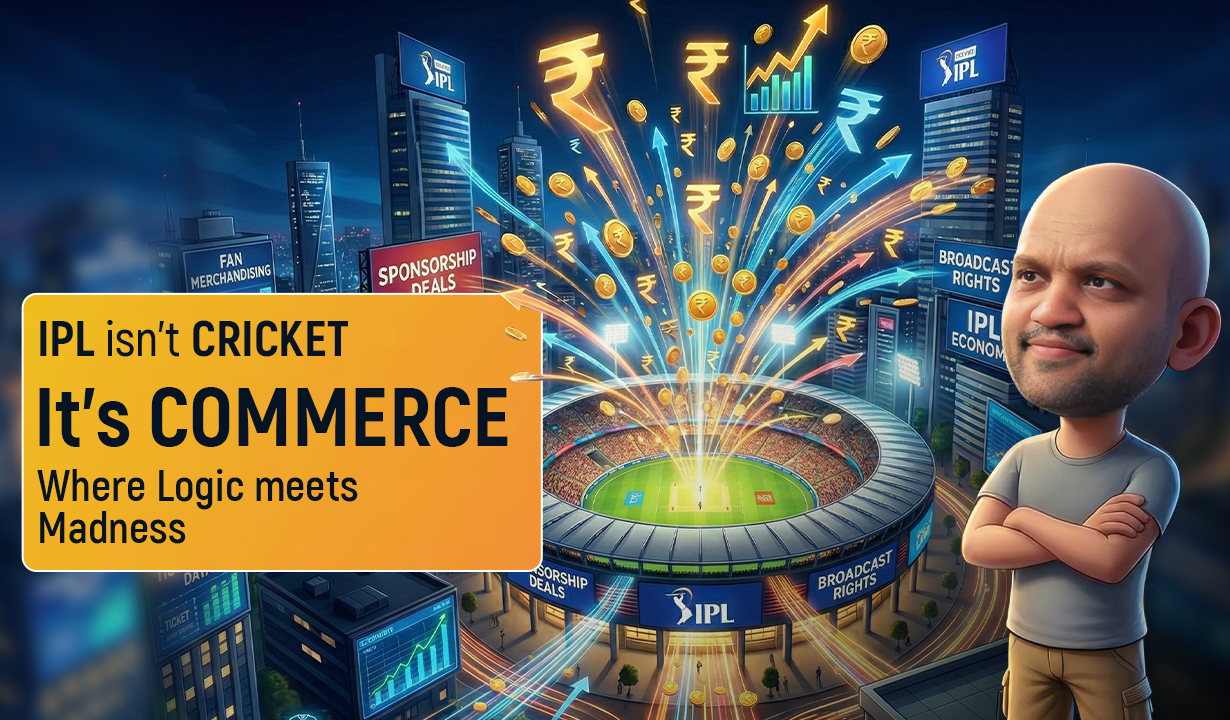
into one of the most valuable sports business ecosystems in India.
In just 17 years:
• Franchise values → exploded (IPL franchise value)
• Player brands → global
• Media rights → a goldmine (IPL media rights value)
This isn’t luck.
This is design.
This is the IPL revenue model in action.
India Has Only Two Real Seasons (For Business)
Let’s correct the narrative.
India doesn’t run on weather.
It runs on consumer behavior:
- Diwali Season → Buy everything
- IPL Season → Sell everything
That’s it.
If your brand isn’t planning for IPL,
you’re not invisible—
you’re irrelevant.
This is why brands invest in IPL every year—because the IPL marketing strategy guarantees attention.
Peak Indian Socialism (And Nobody Complains)
IPL might be India’s most successful version of socialism within the Indian Premier League business:
- Billionaires own teams
• Corporates flood capital
• Celebrities amplify attention
• Hedge funds are entering
And the public gets:
• world-class entertainment
• daily drama
• emotional highs and lows
At near-zero cost.
Redistribution—
but entertaining.
IPL 2026 Begins. Again. Obviously.
Every year, the same question returns:
“Will people get tired?”
No.
There is no:
• IPL fatigue
• Cricket fatigue
This is a country that will:
• watch matches
• rewatch highlights
• rewatch old matches
• debate them like policy
This explains why IPL is so popular in India.
Consumption doesn’t drop.
It compounds.
MS Dhoni and the Eternal “Last Season”
Every season:
“This is Dhoni’s last.”
And every season:
He returns.
At this point:
• Retirement is a storyline
• Dhoni is a recurring asset
A key driver of IPL brand value.
But maybe this time.
Maybe.
Virat Kohli – Now Without the Asterisk
Kohli enters IPL 2026 with:
• a trophy
• unfinished hunger
• the same relentless intensity
The “almost” tag is gone.
That makes him more dangerous—
not less.
Star power like this is what fuels the business of cricket in India.
The Rest of the Circus (Which Is the Point)
- Rohit Sharma quietly collecting wins
• Jasprit Bumrah bending physics
• New players becoming stars overnight
Yes, skill matters and so do leadership lessons from sports and high-pressure performance.
But let’s not pretend.
Entertainment is the product.
Cricket is the vehicle IPL as entertainment, not just sport.
Match Fixing? Honestly…
Every year, outrage resurfaces:
“Is IPL fixed?”
Here’s the uncomfortable truth:
Most people don’t care.
If:
• money flows
• stakes rise
• drama delivers
And in return we get:
• last-over thrillers
• insane finishes
• daily engagement
That’s not a flaw.
That’s the model.
That’s how IPL makes money.
The Power Cocktail Nobody Saw Coming
IPL fused:
• Cricket
• Bollywood
• Politics
• Business
Now add:
• Private equity
• Hedge funds
• Global capital
The real money is here, scaling the IPL valuation and ecosystem.
The only question:
Will they scale the chaos—
or sanitize it?
Because IPL works because it’s unpredictable.
Too much structure kills magic.
Final Truth
IPL is not about cricket.
It’s about:
• attention
• consumption
• emotion
• perfectly timed monetization
It is India’s most logical obsession—
and the most successful IPL business model ever created.
Closing Line
The rich will invest.
Brands will sell.
Players will perform.
And India?
Will watch.
Because no one says no
to two months of perfectly engineered entertainment.
FAQs
1. How does the IPL business model work?
The IPL business model is built on multiple revenue streams—primarily broadcasting rights, sponsorships, ticket sales, and merchandise. The biggest chunk comes from media rights, which are shared among franchises, making the league highly profitable and scalable.
2. How do IPL teams make money?
IPL teams generate revenue through:
• Broadcasting revenue share
• Brand sponsorships and partnerships
• Ticket sales and matchday income
• Merchandise and fan engagement
This diversified model ensures that franchises remain profitable even with high player costs.
3. Why is IPL so popular in India?
The IPL combines cricket with entertainment, celebrity culture, and high-stakes competition. Its short format, daily matches, and strong emotional connect make it one of the most consumed sporting events in India, with massive viewership every season.
4. Is the IPL profitable for franchise owners?
Yes. IPL franchises are highly profitable due to central revenue sharing, rising media rights deals, and strong sponsorship inflows. Many teams have seen massive valuation growth, turning them into billion-dollar assets over time.
5. What are the main revenue sources of the IPL?
The key revenue sources include:
• Broadcasting and digital streaming rights (largest contributor)
• Title and team sponsorships
• Ticket sales and stadium revenue
• Merchandise and licensing
Together, these make IPL one of the richest sports leagues globally.