Workplace Stress Management: What Actually Works (Real Office Experiment)

Opening Truth
April is called Stress Awareness Month in the workplace.
Which usually means:
A few emails.
A poster.
Maybe a workshop.
And then… back to business.
Let’s be honest —
awareness doesn’t reduce workplace stress.
Measurement does.
Intervention does.
Consistency does.
So this year, we did something different.
We stopped talking about stress management at work.
We started testing it.
The Experiment
Inside a live office environment, we ran a controlled workplace stress management experiment using the Solh Wellness ecosystem.
No assumptions.
No “feel-good” activities.
Everything was structured.
Everything was measured.
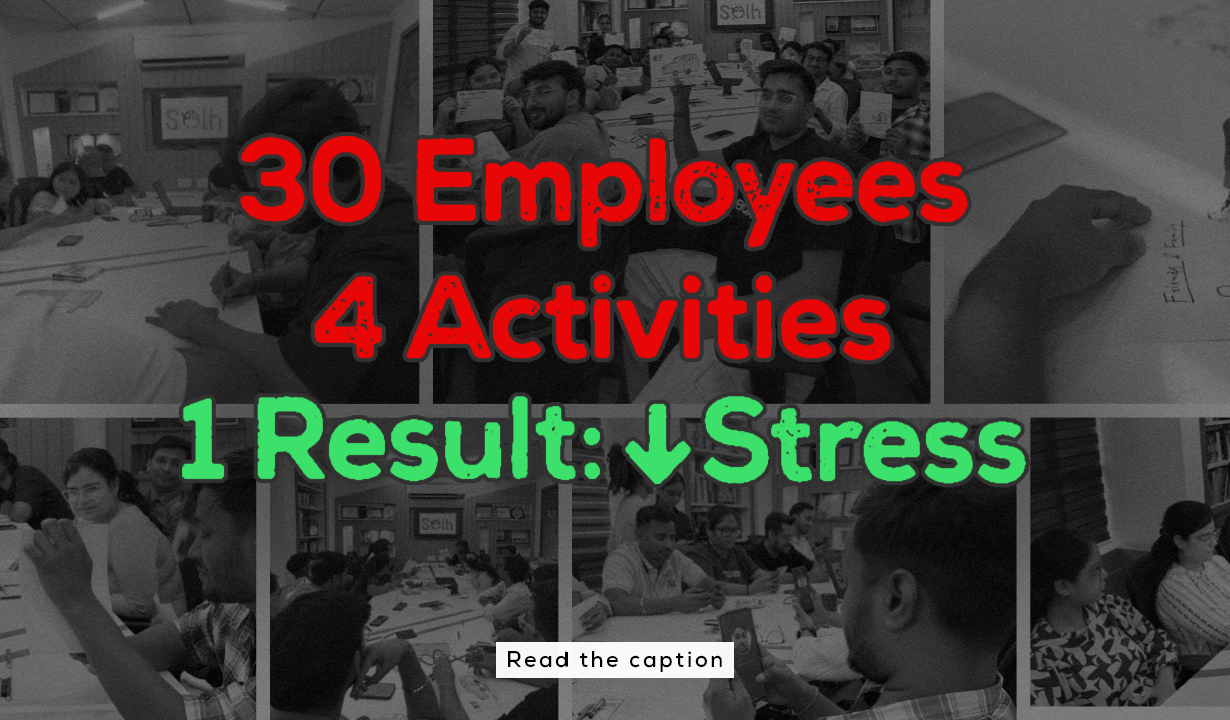
We designed 4 employee stress management interventions:
- Guided Meditation
A breathing-based reset to calm the nervous system before work, a simple stress management technique for employees. - Art Therapy
A non-verbal exercise to externalize stress and visualize calm, increasingly used in workplace mental health programs. - Progressive Muscle Relaxation (PMR)
A physical technique to release stored tension in the body, one of the most effective stress reduction techniques at work. - Reflective Journaling + Grounding
A cognitive + sensory reset to anchor attention and reduce overwhelm, useful for managing stress in the workplace.
All sessions were delivered through the Solh app.
All participants were measured before and after using stress measurement tools in the workplace.
The Data (This Is Where It Gets Interesting)
We didn’t rely on feedback forms.
We relied on numbers.
📊 Average Baseline Stress Score: 6.4
📉 Average Post-Session Score: 6.2
👥 30+ employees participated
Session-level impact:
Meditation: 6.2 → 5.99
Art Therapy: 6.5 → 6.23
PMR: 6.3 → 6.10
Journaling + Grounding: 6.5 → 6.30
Every single session showed a drop.
No exceptions.
This highlights how data-driven workplace stress solutions can create measurable impact, even in short sessions.
What Most Companies Miss
Here’s the uncomfortable truth:
Most organizations don’t have a workplace stress problem.
They have a visibility problem.
They don’t know:
Who is stressed
When stress peaks
What actually reduces it
So they guess.
And guesswork doesn’t scale, especially when it comes to employee stress and retention challenges.
What We Learned
- Stress is measurable
The moment you start tracking it using workplace stress tracking tools, behaviour changes, especially when you start noticing invisible stress before it becomes a crisis. - Small interventions work
You don’t need 3-day offsites.
You need 10-minute structured resets, practical stress management techniques at work. - High-stress employees benefit the most
The people you’re most worried about?
They respond fastest when given the right employee wellness solutions. - Consistency beats intensity
One session helps.
A system changes outcomes, especially in corporate wellness programs.
The Bigger Shift
We don’t need more “wellness programs.”
We need workplace stress management systems inside organizations.
Something that:
Measures stress in real time
Intervenes with the right tools
Tracks improvement
That’s what Solh is building, a more data-driven approach to workplace mental health.
Final Thought
Stress is already sitting inside your teams.
Quietly affecting:
Productivity
Decision-making
Retention
Culture
Ignoring it doesn’t make it disappear.
Measuring it gives you control, and helps reduce stress at work effectively.
Closing Line
Don’t run another wellness campaign.
Build a system that actually reduces workplace stress.
That’s exactly what we did.
And that’s exactly how Solh works.
FAQs
- What is the most effective way to manage stress in the workplace?
The most effective approach to workplace stress management is a combination of measurement, structured interventions, and consistency. Instead of one-time wellness activities, organizations should use data-driven tools to track stress levels and implement short, repeatable techniques like meditation, muscle relaxation, or journaling to reduce stress at work. - How can companies measure employee stress levels?
Companies can measure employee stress levels using surveys, digital assessment tools, or workplace wellness platforms that track stress scores over time. Regular measurement helps identify when stress peaks, which teams are most affected, and which interventions actually work—making stress management more targeted and effective. - What are simple stress management techniques employees can use at work?
Some of the most effective stress management techniques at work include guided meditation, progressive muscle relaxation, reflective journaling, and grounding exercises. These techniques take as little as 10 minutes and can significantly help in managing stress in the workplace when practiced consistently.