Impact of Protests in India: When Demonstrations Turn Into Public Disruption

I Wasn’t Reading the News. I Was Living It.
Yesterday, I wasn’t scrolling headlines.
I was stuck inside one.
Noida to Delhi. Peak hours.
What should’ve been a 40-minute drive turned into a slow-moving punishment.
Cars stalled.
People stepping out.
Google Maps giving up.
And that creeping frustration turning into one simple question:
👉 What the hell is going on?
Turns out, it was a “protest.”
This is the real impact of protests in India-something you don’t just read about, you experience in real time.
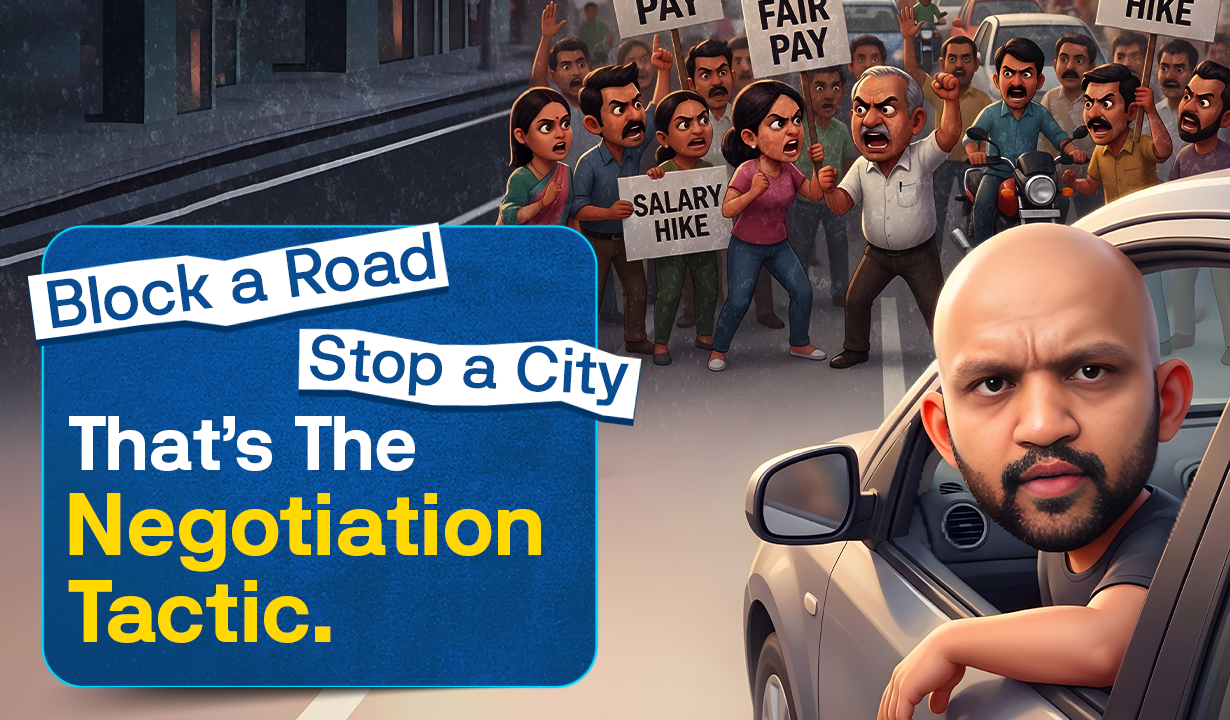
This wasn’t a small disruption. Thousands of factory workers took to the streets across Noida’s industrial belt. Key routes like the Chilla Border and Noida Link Road were completely blocked, bringing traffic to a standstill across Sector 62, Phase-2, and surrounding areas.
What had been building over a few days finally spilled onto the streets-and into the city’s main arteries, showing how protests causing traffic jams in India can paralyse entire regions.
Except It Wasn’t a Protest. It Was a Breakdown.
Let’s call it what it was.
- Roads blocked across major choke points like Sector 62 and Chilla Border
• Massive jams stretching into Delhi
• Multiple vehicles torched; stone pelting reported
• Police deployed tear gas to control the situation
This wasn’t dissent.
👉 This was chaos with a cause-and a clear example of public disruption due to protests in India.
When the Method Overshadows the Cause
Yes, workers were protesting:
• wage gaps
• rising costs
• poor working conditions
Fair concerns.
And when systems fail to respond to peaceful demands, frustration builds. For many, disruption feels like the only way to be heard.
But the moment you:
• burn vehicles
• block highways
• paralyse a city
👉 You’re not asking for rights.
You’re exercising power.
The Real Power in India Is Not What You Think
We’ve been sold a lie for years:
• Power is money
• Power is politics
That’s naive.
India runs on something far more primitive.
👉 The mob.
From “India Vision” – And Nothing Has Changed
I had written this years ago:
India is a country run by the mob or the fear of the mob. It’s not a country run by the politicians, it’s not a country run by the businessmen.
All the businessmen try to do is control the politicians and all politicians want to do is to have a mechanism to control the mob.
Look at yesterday.
• A few thousand people
• Can shut down an entire economic corridor
• Bring cities to a halt
And everyone else?
Just sits in traffic and watches.
What Is a Mob? (Hint: It’s Everyone)
Here’s the uncomfortable part:
The mob is not a group of people, it’s a cause or initiative.
Which means:
• Today it’s factory workers
• Yesterday it was farmers
• Tomorrow it will be someone else
Different faces. Same playbook.
👉 Gather. Block. Disrupt. Get heard.
And We’ve Built a System That Rewards This
What happened yesterday?
• Roads blocked → administration engages
• Violence erupts → negotiations begin
• Chaos spreads → demands get attention
You see the pattern?
👉 Disruption is the fastest path to relevance.
That’s the real problem-and a key reason behind the growing economic impact of protests in India.
The Real Impact of Protests in India Nobody Calculates (Except the Guy in the Car)
Let me translate that jam for you:
• Thousands of lost work hours
• Businesses delayed
• Deliveries disrupted
• Fuel wasted
• Emergency services stuck
And beyond that:
• industrial operations halted
• supply chains hit
• investor confidence shaken
In situations like this, entire industrial pockets-like Sector 84-slow down or shut completely, turning a few hours of disruption into a much larger ripple effect across businesses.
👉 This isn’t inconvenience.
This is economic damage disguised as protest – and shows how protests affect businesses in India at multiple levels. And this isn’t new – public frustration around such disruption has been building for years, as discussed in Why Are Farmers Protests a Nuisance?
The Most Dangerous Mob? The Polished One
From my own writing:
Even educated and well-spoken groups can fall into the same pattern-where the belief that “my cause deserves disruption” overrides everything else.
Because:
• method changes
• language changes
But the core stays the same:
👉 “My cause deserves disruption.”
This Is India’s Real Growth Problem
Not policy.
Not talent.
Not even infrastructure.
👉 Uncontrolled mob behaviour.
Because what’s the point of building:
• expressways
• industrial hubs
• global supply chains
If a group can just:
shut it all down before lunch?
What Needs to Happen (No More Soft Talk)
Let’s stop pretending this needs committees.
- Zero Tolerance for Road Blockades
• Highways blocked = immediate forceful clearance
• No negotiations while public is suffering
- Designated Protest Zones
• Protest all you want
• But in areas where:
👉 zero disruption is caused
- Financial Accountability
• Every damaged vehicle
• Every broken asset
👉 Recover it. Fully. From organizers.
- Immediate Enforcement
• Not “monitoring”
• Not “dialogue in progress”
👉 Clear it. Fast. Every time.
The Truth Nobody Wants to Admit
Democracy does NOT mean:
“Get enough people and you can shut the system.”
That’s not democracy.
👉 That’s mob rule with better branding.
Final Thought
Yesterday, sitting in that jam, one thing became painfully clear:
We are not being slowed down by lack of infrastructure.
We are being slowed down by:
a system that rewards disruption over discipline
From traffic paralysis to industrial slowdown, the impact of protests in India goes far beyond what we see on the surface.
Until that changes,
India will keep building…
…and mobs will keep stopping.
Frequently Asked Questions on the Impact of Protests in India
1. What is the impact of protests on daily life in India?
Protests in India can significantly disrupt daily life, especially in urban areas. Road blockades, traffic congestion, and public transport disruptions often lead to lost work hours, delayed services, and inconvenience for commuters. In many cases, essential services like ambulances and deliveries are also affected.
2. How do protests affect the Indian economy?
The economic impact of protests in India can be substantial. Businesses face delays, supply chains get disrupted, and industrial operations may slow down or stop entirely. In large-scale protests, losses can run into crores due to halted production, reduced trade, and infrastructure damage.
3. Why do protests often block roads in India?
Roads are often blocked during protests because they offer maximum visibility and immediate attention from authorities and the public. Blocking key routes creates pressure on administration to respond quickly, making it a commonly used tactic despite its disruptive consequences.
4. Are there laws against blocking roads during protests in India?
Yes, Indian law does not permit indefinite blocking of public roads and highways. Courts, including the Supreme Court, have stated that public spaces cannot be occupied in a way that disrupts essential movement. However, enforcement varies depending on the situation.
5. How do protests affect businesses and industries in India?
Protests can severely impact businesses by delaying operations, stopping production, and affecting logistics. Industrial areas are especially vulnerable, where even a few hours of disruption can lead to financial losses and reduced productivity across the supply chain.